

 Tiếng Việt
Central Vietnam fishermen have preserved their traditional way of life for generations along the pristine waterways of Quang Nam Province. From the early morning hours when the sun barely kisses the horizon to the late afternoon when boats return laden with the day’s catch, these hardworking individuals embody the authentic spirit of coastal Vietnam. At Dung Coconut Basket Boat, visitors have the rare opportunity to step into this world and experience firsthand the daily rhythms, challenges, and joys that define the lives of *fishermen in Central Vietnam*. This immersive journey offers more than just observation—it’s an invitation to participate in ancient fishing traditions, learn time-honored techniques, and connect with the warm-hearted people who call these waters home.
The Morning Routine of *Central Vietnam Fishermen*
The day begins long before most travelers open their eyes. Central Vietnam fishermen wake at 4:00 AM, preparing their traditional *basket boats* and checking their nets, traps, and fishing gear. This pre-dawn ritual has remained unchanged for centuries, passed down from father to son, mother to daughter. The fishermen gather at the water’s edge, where the distinctive round *coconut boats* bob gently in the calm morning waters of Cam Thanh Village.
These early hours are crucial for catching the freshest seafood. The fishermen navigate through narrow waterways lined with towering *nipa palms*, their skilled hands maneuvering the circular boats with remarkable precision. Each movement is deliberate, each stroke of the paddle perfected through years of practice. Visitors joining the Dung Coconut Basket Boat experience during these morning hours witness the authentic preparations—the sorting of nets, the baiting of crab traps, and the quiet conversations between fishermen as they share weather predictions and fishing spots.
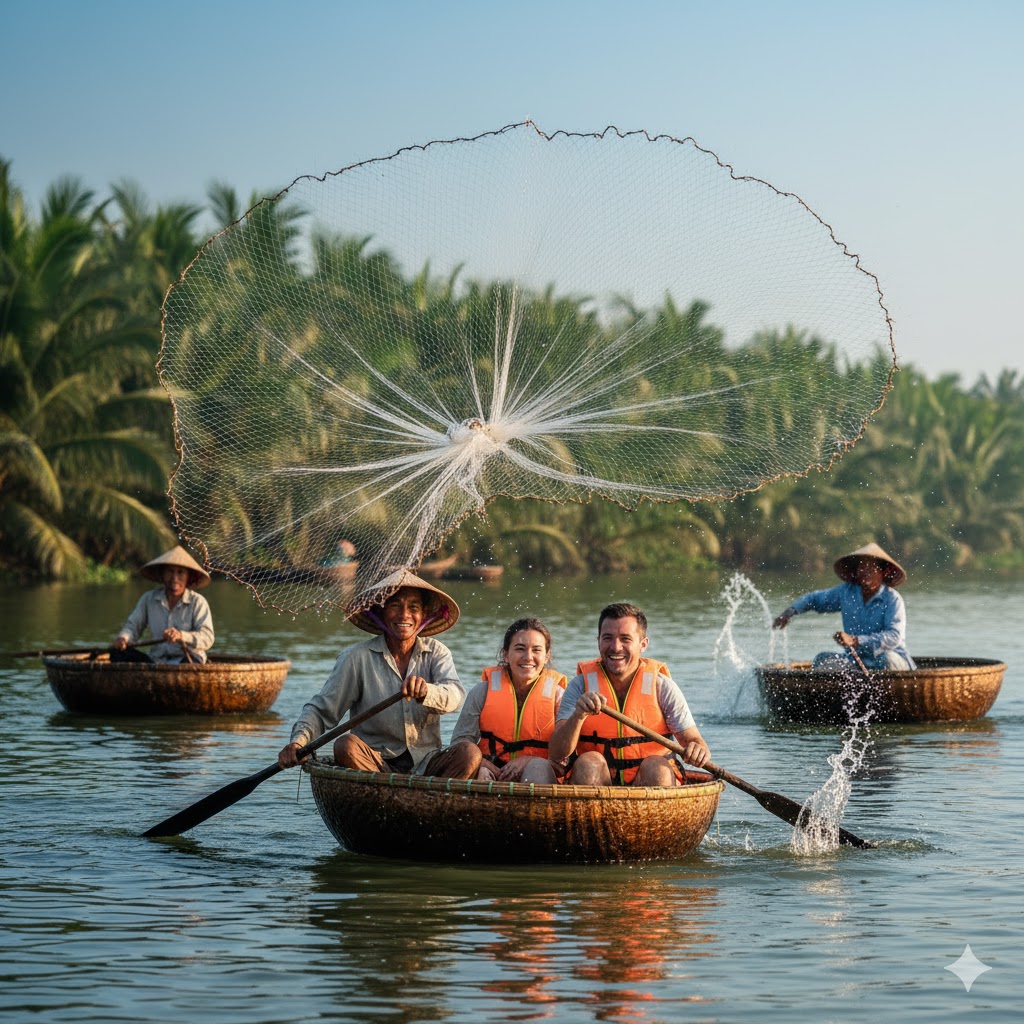
The morning catch typically includes crabs, shrimp, and various fish species native to the Thu Bon River system. Fishermen employ techniques like cast net fishing, where a circular net weighted at the edges is thrown with a graceful arc to capture schools of fish. This method requires incredible skill and timing, something visitors can attempt under the guidance of experienced local fishermen. The satisfaction of successfully casting a net and pulling in your first catch creates an unforgettable connection to this ancient livelihood.
Traditional Fishing Techniques Passed Down Through Generations
The fishing methods used by *Central Vietnam fishermen* are as diverse as the aquatic life they pursue. One of the most iconic techniques involves the *basket boat* itself—a unique vessel made from woven bamboo and sealed with resin from local trees. These boats, typically 1.5 to 2 meters in diameter, are perfectly suited to the shallow, vegetation-rich waters of the Cam Thanh coconut forest. Their circular shape allows for exceptional maneuverability in tight spaces where traditional boats cannot venture.
At Dung Coconut Basket Boat, expert fishermen demonstrate the art of *net casting*, *crab trap placement*, and *fish basket weaving*. The crab traps, constructed entirely from local bamboo, are ingeniously designed with one-way entrances that allow crabs to enter but not escape. These traps are strategically placed in areas where crabs are known to feed, often near the roots of water coconut trees where the ecosystem is richest. Visitors learn to identify the best locations by reading water currents, observing tidal patterns, and recognizing the subtle signs that indicate underwater activity.
Another fascinating technique is *hand-line fishing*, where fishermen use simple lines with hooks to catch individual fish. This method requires patience and a deep understanding of fish behavior. The fishermen share their knowledge generously, explaining how different times of day, water temperatures, and moon phases affect fish feeding patterns. This traditional ecological knowledge represents centuries of accumulated wisdom about the local marine environment.
Perhaps most spectacular is the traditional *cast net performance*, where skilled fishermen create elegant circular patterns as they throw their nets. This technique, while practical, has evolved into an art form. During the Dung Coconut Basket Boat tour, visitors not only watch these demonstrations but also receive hands-on instruction, attempting the coordinated movements that send the net flying through the air in a perfect circle before it settles on the water’s surface.
Life in the *Water Coconut Forest*: More Than Just Fishing
The daily life of Central Vietnam fishermen extends far beyond catching seafood. The *Bay Mau Coconut Forest* in Cam Thanh serves as both workplace and community center, where families have built their lives around the rhythms of the water. Women often accompany their husbands, managing smaller tasks like sorting catches, repairing nets, and preparing simple meals on the boats. Children grow up learning these skills from an early age, playing in the shallow waters while absorbing the knowledge that will one day make them experts.
The *coconut forest ecosystem* provides multiple sources of livelihood. Beyond fishing, families harvest water coconut leaves for thatching roofs and weaving handicrafts. They collect mud crabs that burrow in the soft sediment, and gather edible water plants that grow abundantly in these nutrient-rich waters. This diversified approach to resource use demonstrates the sustainable relationship these communities maintain with their environment.
Social bonds are strengthened through shared work and mutual support. When one family’s nets tear, neighbors help with repairs. When someone falls ill, others ensure their traps are checked and their catch is brought to market. This spirit of community cooperation remains strong despite increasing modernization. Visitors to Dung Coconut Basket Boat often comment on the warmth and openness of these fishing communities, where strangers are welcomed with genuine smiles and families are eager to share their stories.
The afternoon brings different activities. Some fishermen repair their equipment, weaving new sections into damaged nets or reinforcing the bamboo frames of their boats. Others prepare for the evening fishing session, when certain species become more active. Women gather to process the morning’s catch, cleaning fish and boiling crabs for sale at local markets. These scenes of daily life offer visitors authentic glimpses into a lifestyle that remains largely unchanged by time.
Seasonal Variations in the *Fishermen’s Calendar*
The lives of *Central Vietnam fishermen* follow distinct seasonal patterns dictated by weather, water levels, and fish migration. During the dry season from February to August, the waters of Cam Thanh remain relatively calm and clear. This is prime time for certain species, and fishermen venture deeper into the *coconut forest channels* where larger fish hide among the root systems. The hot months require early morning starts to avoid the intense midday heat, and many fishermen return home by 10:00 AM to rest before an evening session.
The wet season, from September to January, brings its own challenges and opportunities. Rising water levels flood areas previously inaccessible by boat, opening new fishing grounds. However, storms and heavy rains can keep fishermen shore-bound for days at a time. During these months, Central Vietnam fishermen focus more on trap-based fishing methods that can be left overnight, reducing the need for constant water time during unpredictable weather. Shrimp become particularly abundant during this season, and specialized techniques for shrimp harvesting take center stage.
The lunar calendar also plays a crucial role. Full moon periods typically yield smaller catches as fish can see nets more clearly in the bright moonlight. Conversely, the new moon periods bring darkness that favors fishermen. Experienced locals can predict fishing success simply by glancing at the moon phase. At Dung Coconut Basket Boat, guides explain these natural cycles and help visitors understand how *traditional fishing communities* work in harmony with natural patterns rather than against them.
Economic Realities and Challenges Facing *Modern Fishermen*
Despite the romantic image of traditional fishing, Central Vietnam fishermen face significant economic pressures in the modern era. The income from small-scale fishing is often insufficient to support families, particularly as the cost of living rises. Many young people leave for city jobs, concerned about the financial instability and physical demands of fishing life. This generational shift threatens the continuity of traditional knowledge and skills that have been preserved for centuries.
Environmental changes also impact fishing yields. Upstream development, pollution, and climate change have altered fish populations and water quality. Fishermen report that catches are smaller and less predictable than in previous decades. Some species that were once abundant have become rare, forcing adaptations in fishing techniques and target species. The resilience of these communities is tested as they seek balance between maintaining traditional practices and adapting to new realities.
Tourism has emerged as a supplementary income source that helps sustain fishing families. Organizations like Dung Coconut Basket Boat create opportunities for fishermen to share their skills with visitors while earning additional income. This model benefits both parties—tourists gain authentic cultural experiences while fishermen receive compensation that helps them maintain their traditional lifestyle. The tourism revenue also incentivizes the preservation of the *coconut forest ecosystem* and traditional boats, which might otherwise be abandoned for more modern equipment.
However, finding the right balance remains challenging. Too much tourism can disrupt fishing activities and damage the fragile ecosystem. Too little fails to provide sufficient economic support. The most successful operations, like Dung Coconut Basket Boat, carefully manage visitor numbers and timing to ensure tourism complements rather than replaces traditional fishing activities.
Cultural Significance of *Fishing Traditions* in Hoi An
For Central Vietnam fishermen, their occupation represents far more than economic activity—it’s a fundamental part of cultural identity. The skills, knowledge, and values associated with fishing life have shaped community character for generations. Respect for elders who possess the deepest knowledge, cooperation in shared waterways, and careful stewardship of natural resources are values instilled from childhood and reinforced daily through fishing practices.
Traditional fishing techniques are celebrated during local festivals and cultural events. The *basket boat rowing competitions* held annually showcase the remarkable skill required to navigate these unique vessels. Young fishermen compete in races that test speed, agility, and control, while older masters demonstrate traditional net-throwing techniques. These celebrations reinforce community pride in their heritage and educate younger generations about their cultural roots.
The distinctive *round basket boats* have become symbols of Hoi An’s fishing culture, recognized nationally and internationally. Their unique design, perfectly adapted to local conditions, represents the ingenuity of Vietnamese coastal communities. Visitors from around the world come specifically to experience these boats, recognizing them as living cultural artifacts that connect present-day Vietnam to its historical past.
Local cuisine also reflects fishing traditions. The freshest seafood is prepared using recipes passed down through families, with techniques for grilling, steaming, and making broths that maximize flavor while honoring the catch. At Dung Coconut Basket Boat, visitors often have opportunities to enjoy meals prepared by fishing families, experiencing not just the food but the cultural context that makes it meaningful. These shared meals become moments of cultural exchange where stories are told and friendships are formed.
Hands-On Experience at Dung Coconut Basket Boat
Dung Coconut Basket Boat offers the most authentic opportunity to experience the daily life of *Central Vietnam fishermen*. Unlike passive tour operations where visitors merely observe, this experience puts you in the basket boat alongside experienced fishermen who serve as both guides and teachers. The journey begins at Group 4, Thanh Nhi Hamlet, Cam Thanh Commune, where families have fished for generations and maintain the traditional lifestyle with genuine pride.
The experience typically starts with an introduction to *basket boat basics*. Guides demonstrate the rowing technique—a figure-eight motion that propels the circular boat forward—and then invite visitors to try. The initial wobbliness gives way to growing confidence as you master the unique physics of these remarkable vessels. This hands-on learning creates an immediate appreciation for the skill level required of fishermen who navigate these boats effortlessly through narrow channels.
Next comes fishing instruction. Depending on the season and conditions, you might learn *cast net throwing*, *crab trap setting*, or *hand-line fishing*. The fishermen are patient teachers, understanding that these techniques take years to perfect but ensuring you experience the fundamentals. The excitement of catching your first crab or successfully casting a net creates lasting memories and genuine respect for the expertise of *local fishermen*.
The tour winds through the *Bay Mau Coconut Forest*, a stunning natural area where thousands of water coconut palms create a green canopy over winding waterways. This ecosystem is home to diverse wildlife including water birds, fish, crabs, and countless insect species. Your guide points out edible and medicinal plants, explains the ecological relationships that sustain the forest, and shares stories of how these waterways have shaped local life.
Many visitors comment that the highlight isn’t any single activity but rather the personal connections formed with the fishermen. Through translation when needed or simply through shared laughter and gestures, bonds develop that transcend language barriers. You come to understand that Central Vietnam fishermen are not relics of the past but vibrant, contemporary people who have chosen to maintain meaningful traditions while engaging with the modern world.
Planning Your Visit to Experience *Authentic Fishing Life*
For travelers wanting to genuinely experience the daily life of Central Vietnam fishermen, proper planning enhances the experience significantly. The best times to visit are early morning (departing between 8:00-9:00 AM) or late afternoon (departing between 3:00-4:00 PM) when fishing activities are most active and temperatures are comfortable. The early morning slots offer opportunities to see the end of the dawn fishing session, while afternoon visits allow participation in trap checking and evening preparation.
Dung Coconut Basket Boat operates Monday through Sunday from 8:00 AM to 6:00 PM, with tours lasting approximately 2-3 hours depending on the package selected. Booking in advance is recommended, particularly during peak tourist seasons (February-April and August-October) when slots fill quickly. Contact can be made via phone at 0935117418, Hotline at +84 905 434 577, or through messaging apps including Zalo and WhatsApp at +84 935 117 418.
Appropriate clothing is essential for comfort and cultural respect. Light, quick-drying clothes work best as splashing is inevitable while learning to row. Sun protection including hats, sunglasses, and sunscreen is crucial given the intense tropical sun reflecting off the water. Water-safe footwear like sandals or water shoes protects feet while allowing you to wade in shallow areas. Most importantly, bring an open mind and willingness to engage fully with the experience rather than remaining a passive observer.
The location in Cam Thanh Village is approximately 5 kilometers from Hoi An’s Ancient Town, easily reached by bicycle, motorbike, or taxi. The 15-20 minute journey passes through rural landscapes that provide their own glimpses into *Vietnamese countryside life*. Many visitors combine their fishing experience with other Cam Thanh attractions, creating a full day of cultural immersion away from the more touristed areas of Hoi An.
Prices vary depending on group size and specific activities requested, so contacting Dung Coconut Basket Boat directly ensures you receive current information and can customize your experience. Note: Prices are for reference only and may vary depending on season and service arrangements. The investment, however, goes beyond a simple tourist activity—it directly supports fishing families and helps preserve traditional livelihoods that might otherwise disappear under economic pressures.
Sustainable Tourism and Supporting *Local Fishing Communities*
Choosing to experience the life of *Central Vietnam fishermen* through responsible operators like Dung Coconut Basket Boat contributes to sustainable tourism that benefits local communities. Unlike large tour companies that extract profit from cultural experiences while providing minimal benefit to actual fishing families, community-based operations ensure that tourism revenue flows directly to the people whose lives and knowledge make these experiences possible.
This economic support has ripple effects throughout the community. Families can afford to keep children in school while maintaining fishing traditions. Young people see viable futures in their home villages rather than feeling forced to migrate to cities. The *coconut forest ecosystem* is valued and protected because it generates sustainable income through tourism combined with traditional use. Traditional skills are preserved and passed to new generations because they remain economically relevant.
Visitors play a crucial role in this sustainability model by choosing authentic, community-based experiences over impersonal mass tourism products. By booking directly with operations like Dung Coconut Basket Boat, asking questions that demonstrate genuine interest, engaging respectfully with fishing families, and sharing positive experiences with other travelers, tourists become partners in cultural preservation. Your visit becomes more than personal enrichment—it becomes an act of cultural conservation.
Photography offers another way to support these communities. Sharing images with attribution to the specific community and operator helps build awareness and attracts other responsible travelers. However, always ask permission before photographing individuals, especially children, and respect any requests to avoid certain shots. The goal is to represent the dignity and skill of Central Vietnam fishermen rather than exoticizing or objectifying their lifestyle.
What You’ll Learn from *Fishermen’s Wisdom*
Spending time with Central Vietnam fishermen provides lessons that extend far beyond fishing techniques. These communities embody principles of sustainability practiced long before the term became fashionable. They take only what they need, use resources completely with minimal waste, and maintain practices that allow fish populations to regenerate. Their relationship with the environment is based on reciprocity and respect rather than extraction and exploitation.
The patience required for successful fishing translates to life wisdom about timing, observation, and working with natural patterns rather than against them. Fishermen learn to read subtle environmental signs—changes in water color indicating fish schools, bird behavior revealing underwater activity, weather patterns forecasting storms. This attunement to nature’s signals develops a mindfulness that modern life often lacks.
Community cooperation offers another valuable lesson. In *fishing villages*, success depends on mutual support and shared knowledge. Competition exists but within a framework of collective wellbeing. When everyone succeeds modestly, the community thrives; when individuals prioritize personal gain over communal good, everyone suffers. These principles of balanced interdependence offer alternatives to the hyper-individualistic models that dominate much of modern society.
Perhaps most importantly, time spent with fishing families reveals that happiness doesn’t require material abundance. Despite economic challenges and physically demanding work, these communities exhibit remarkable contentment. Their wealth lies in strong family bonds, deep community connections, meaningful work, and intimate relationships with the natural world. For many visitors, this realization becomes the most transformative aspect of experiencing the daily life of *Central Vietnam fishermen*.
Conclusion: Connecting with Central Vietnam Fishermen
The opportunity to experience the daily life of Central Vietnam fishermen represents far more than a tourist activity—it’s a bridge between cultures, eras, and worldviews. Through organizations like Dung Coconut Basket Boat, visitors gain authentic insights into a way of life that has sustained communities for centuries while facing uncertain futures in a rapidly changing world. Every cast net thrown, every basket boat rowed, and every conversation shared contributes to the preservation of invaluable traditional knowledge and supports families maintaining meaningful connections to their cultural heritage.
The *fishermen of Cam Thanh* welcome visitors not as spectators but as participants in their daily lives. They share their skills generously, teach their techniques patiently, and open their world to those genuinely interested in understanding their experiences. In return, they ask only for respect, authentic engagement, and the economic support that makes traditional lifestyles viable in the modern economy. This exchange, when conducted thoughtfully, enriches all parties and creates the conditions for cultural preservation.
As you plan your visit to Hoi An and Quang Nam Province, consider allocating time to truly connect with Central Vietnam fishermen. Contact Dung Coconut Basket Boat at their Cam Thanh location—Group 4, Thanh Nhi Hamlet, Cam Thanh Commune—by calling 0935117418, reaching their hotline at +84 905 434 577, or messaging via Zalo or WhatsApp at +84 935 117 418. The memories created during these hours on the water, the skills learned from master fishermen, and the personal connections formed will likely outlast any other aspect of your Vietnamese journey, reminding you that the most meaningful travel experiences come from genuine human connection across cultural boundaries.
“