

 Tiếng Việt
Coconut Forest Ecosystem at Bay Mau in Cam Thanh Commune, Hoi An City, Quang Nam Province, represents one of Vietnam’s most remarkable natural treasures. This lush mangrove sanctuary offers visitors an intimate glimpse into a thriving wetland habitat where water, forest, and wildlife coexist in perfect harmony. The *Bay Mau coconut forest* has become a symbol of ecological preservation and cultural heritage, drawing nature enthusiasts and travelers seeking authentic experiences along Hoi An’s iconic waterways.
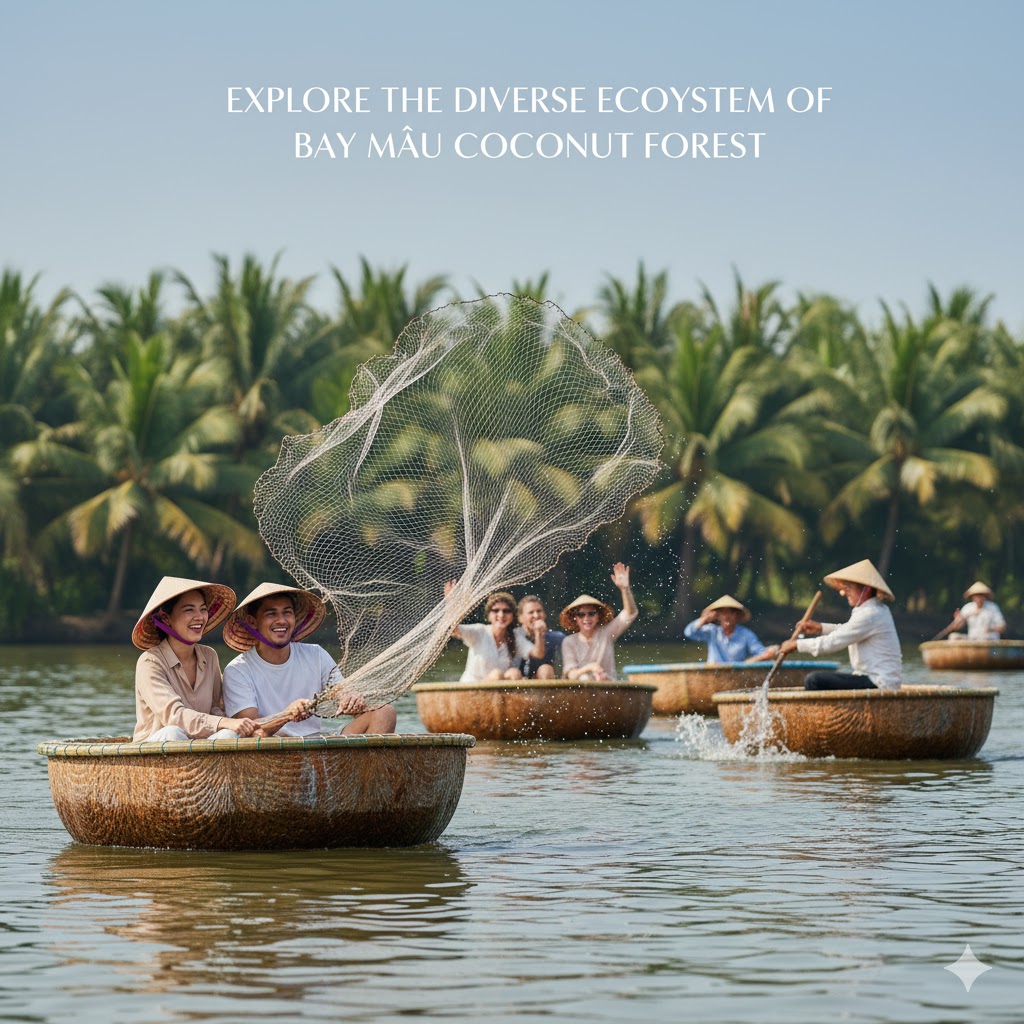
The journey through this verdant paradise aboard traditional *basket boats* reveals layers of biodiversity that have flourished for generations. As you glide through narrow channels surrounded by towering *nipa palms* and water coconut trees, you’ll discover why this ecosystem has captivated scientists, conservationists, and tourists alike. The Coconut Forest Ecosystem serves as a vital refuge for countless species while providing sustainable livelihoods for local fishing communities who have learned to live in balance with nature.
Understanding the Bay Mau Coconut Forest’s Unique Habitat
The Coconut Forest Ecosystem at Bay Mau spans approximately 7 hectares of protected mangrove forest, characterized by dense coverage of *water coconut palms* (Nypa fruticans) that have adapted perfectly to the brackish water conditions. This unique environment exists where the Thu Bon River meets tidal influences from the East Sea, creating a distinctive ecological zone that supports an extraordinary range of plant and animal life.
The forest’s foundation lies in its complex root systems that stabilize sediments and filter water naturally. These intricate networks of roots create microhabitats for juvenile fish, crustaceans, and mollusks, making the area a natural nursery for marine species. The *mangrove vegetation* acts as a buffer zone protecting inland areas from coastal erosion and storm surges while simultaneously purifying water through natural filtration processes.
What makes this *coconut forest habitat* particularly special is its adaptation to both freshwater and saltwater conditions. During high tide, seawater penetrates deep into the forest channels, while low tide exposes mudflats teeming with life. This dynamic environment creates distinct ecological niches where specialized species have evolved remarkable survival strategies.
Flora Diversity in the Coconut Forest
The botanical diversity within the Coconut Forest Ecosystem extends far beyond the dominant *water coconut palms* that give the forest its name. These resilient palms, reaching heights of 6-9 meters, form a dense canopy that provides shade and habitat structure for countless organisms beneath. Their feather-like fronds create a cathedral-like atmosphere as sunlight filters through, casting dancing shadows on the water’s surface.
Accompanying the *nipa palms* are various mangrove species including *Rhizophora* (red mangroves) and *Avicennia* (black mangroves), each contributing unique ecological functions. The red mangroves feature distinctive prop roots that arch from trunks into the mud, creating natural barriers that trap sediment and organic matter. Black mangroves employ pneumatophores—specialized breathing roots that project upward from the mud—allowing them to obtain oxygen in waterlogged conditions.
Epiphytic plants, ferns, and climbing vines add additional layers of complexity to the forest structure. These opportunistic species utilize the *coconut palm trunks* and branches as substrate, creating vertical gardens that increase the overall biodiversity. During the rainy season, the forest floor becomes carpeted with moisture-loving herbs and grasses that provide food sources for herbivorous wildlife.
The seasonal variations in *Bay Mau’s vegetation* reflect the ecosystem’s response to monsoon patterns and tidal cycles. Certain aquatic plants emerge during low water periods, while others thrive when water levels rise, ensuring year-round productivity and habitat availability for dependent species.
Fauna and Wildlife Population
The Coconut Forest Ecosystem supports an impressive array of fauna, from microscopic organisms to larger vertebrates that depend on the mangrove habitat for survival. Birdwatchers are particularly drawn to Bay Mau, as the forest serves as a crucial stopover for migratory species traveling along the East Asian-Australasian Flyway, one of the world’s most important migration routes.
Over 50 bird species have been recorded in the *coconut forest area*, including egrets, herons, kingfishers, and various species of terns. The white-breasted waterhen and purple swamphen are common residents, their distinctive calls echoing through the channels as they forage among the roots. During migration seasons, the forest becomes a temporary home for thousands of shorebirds seeking rest and nutrition before continuing their journeys.
The mudflats and water channels teem with *aquatic life* including various crab species—particularly the distinctive *fiddler crabs* with their oversized claws, and *mudskippers* that have evolved the remarkable ability to “”walk”” on land using their pectoral fins. These amphibious fish are often seen climbing roots and basking on exposed mud during low tide, demonstrating the fascinating adaptations that make *mangrove ecosystems* such biological hotspots.
Fish populations include mullet, gobies, and juvenile snappers that use the protective root systems as nursery grounds. The presence of these fish attracts larger predators, creating a complete food web. Local fishermen have sustainable harvesting practices that maintain population balance while providing income—a perfect example of ecosystem services benefiting human communities.
Reptiles such as water snakes and monitor lizards occasionally appear, playing important roles as predators that help regulate populations of smaller animals. Meanwhile, the invertebrate community—including various shrimp species, barnacles, and oysters—forms the foundation of the food chain, converting plant material and detritus into animal protein that supports higher trophic levels.
Ecological Functions and Environmental Benefits
The Coconut Forest Ecosystem at Bay Mau performs essential ecological functions that extend far beyond its physical boundaries. As a *coastal wetland*, the forest acts as a natural water treatment facility, filtering pollutants and excess nutrients from agricultural runoff before they reach the ocean. This purification process helps maintain water quality in surrounding areas, benefiting both marine ecosystems and human communities.
Carbon sequestration represents another critical function of this *mangrove habitat*. The dense vegetation and organic-rich soils store significant amounts of carbon dioxide, making mangrove forests among the most carbon-dense ecosystems on Earth—surpassing even tropical rainforests in their carbon storage capacity per unit area. The preservation of Bay Mau contributes directly to climate change mitigation efforts.
The forest’s role in coastal protection cannot be overstated. The intricate root systems and dense vegetation dissipate wave energy during storms, reducing coastal erosion and protecting inland communities from flooding. Historical records show that areas protected by healthy *coconut forests* experience significantly less damage during typhoons compared to exposed coastlines.
Bay Mau also serves as a living laboratory for understanding wetland ecology and developing sustainable management practices. Research conducted in the forest has contributed valuable knowledge about mangrove restoration, species interactions, and the impacts of climate change on coastal ecosystems. These insights inform conservation strategies throughout Vietnam and beyond.
Traditional Activities and Cultural Connection
The relationship between local communities and the Coconut Forest Ecosystem spans generations, creating a rich cultural heritage intertwined with ecological knowledge. Traditional fishing techniques practiced in Bay Mau demonstrate sustainable resource use that has allowed both humans and nature to thrive. Fishermen employ various methods including *cast nets*, *fish traps* woven from coconut fronds, and *hook-and-line fishing*—all techniques passed down through families.
The iconic *basket boat* (thúng chai) represents more than just transportation—it embodies centuries of adaptation to the unique challenges of navigating narrow *mangrove channels*. These circular vessels, woven from bamboo and sealed with resin, can spin 360 degrees and navigate the shallowest waters where conventional boats cannot go. Local residents have perfected the art of rowing these boats using a distinctive technique that combines paddling and spinning motions.
Many families in Cam Thanh have shifted from purely extractive activities to ecotourism, becoming guides who share their intimate knowledge of the *coconut forest’s* secrets with visitors. This transition has created economic opportunities while simultaneously incentivizing conservation—when the forest thrives, tourism flourishes, and communities prosper. The traditional basket boat experience has become one of Hoi An’s most sought-after activities.
Cultural practices associated with the forest include *harvest festivals* celebrating the coconut collection season, traditional music performances, and craft demonstrations showing how coconut fronds are transformed into useful items. These living traditions help younger generations maintain connections to their heritage while appreciating the importance of ecosystem conservation.
Experiencing the Ecosystem at Dung Coconut Boat Tour
Dung Coconut Basket Boat offers immersive experiences that showcase the Coconut Forest Ecosystem in its full splendor while supporting conservation efforts and local communities. Their expert guides—many born and raised in Cam Thanh—provide authentic insights into the forest’s ecology, pointing out wildlife, explaining plant adaptations, and sharing stories of traditional life among the *coconut palms*.
The tour experience begins with an introduction to *basket boat rowing techniques*, allowing visitors to try steering these unique vessels themselves. As you venture deeper into the labyrinth of green channels, the modern world fades away, replaced by bird songs, rustling palm fronds, and the gentle splash of water against your boat. Guides demonstrate traditional fishing methods and explain how different species utilize various parts of the ecosystem.
Photography opportunities abound throughout the journey, from dramatic canopy perspectives to intimate close-ups of *mudskippers* and *fiddler crabs*. The interplay of light and shadow through the *coconut forest canopy* creates magical scenes, particularly during golden hour when sunlight bathes the forest in warm tones. Many visitors capture memorable moments learning to spin their basket boats or wearing traditional Vietnamese hats while navigating the waterways.
Interactive elements include fishing demonstrations, coconut leaf weaving workshops, and sometimes musical performances where guides play traditional instruments while boats gather in a peaceful clearing. These experiences provide deep cultural connections beyond simple sightseeing, creating lasting memories and appreciation for the unique basket boat culture of Hoi An.
Dung Coconut Basket Boat
Phone: 0935117418
Hotline: +84 905 434 577
Zalo: +84 935 117 418
WhatsApp: +84 935 117 418
Address: Group 4, Thanh Nhi Hamlet, Cam Thanh Commune, Hoi An City
Working Hours: Monday – Sunday (8:00 – 18:00)
Note: Prices are for reference only and may vary depending on season and service specifications.
Conservation Challenges and Ongoing Efforts
Despite its protected status, the Coconut Forest Ecosystem faces various challenges that threaten its long-term sustainability. *Climate change* impacts including sea level rise, changing precipitation patterns, and increased storm intensity pose significant risks to the delicate balance of this coastal habitat. Rising water temperatures affect species distributions, while altered salinity levels can stress vegetation adapted to specific conditions.
Urban development pressures from nearby Hoi An’s tourism expansion create indirect threats through increased water pollution, noise disturbance, and habitat fragmentation. Agricultural runoff carrying pesticides and fertilizers can disrupt the ecosystem’s natural processes, affecting water quality and organism health. Managing these external pressures requires coordinated efforts among government agencies, local communities, and tourism operators.
Invasive species represent another concern, as non-native plants and animals can outcompete indigenous species for resources. Regular monitoring programs track ecosystem health indicators, allowing early detection of problems before they become critical. Community-based conservation initiatives have proven particularly effective, empowering local residents to act as stewards of their natural heritage.
Restoration projects have successfully replanted thousands of *water coconut palms* in degraded areas, expanding habitat availability and improving ecosystem resilience. Educational programs targeting schools and tourist groups help build public awareness about the importance of mangrove conservation. The economic benefits generated through sustainable ecotourism provide powerful incentives for maintaining healthy ecosystems rather than converting them to other uses.
Best Times to Visit and What to Expect
The Coconut Forest Ecosystem offers unique experiences throughout the year, though certain seasons provide optimal conditions for wildlife viewing and comfortable exploration. The dry season from February to May features calmer weather and lower water levels that expose mudflats, making it easier to observe *crabs*, *mudskippers*, and wading birds. The lush green canopy provides welcome shade during warmer days.
During the rainy season from September to January, the forest takes on a different character with higher water levels creating deeper channels and a more dramatic atmosphere. This period coincides with migratory bird arrivals, offering excellent birdwatching opportunities. The increased water flow brings nutrients that support productive fishing, and you may see more traditional fishing activities in action.
Early morning visits (between 7:00-9:00 AM) typically offer the most active wildlife viewing as birds feed during cooler temperatures and tidal conditions often reveal interesting shoreline creatures. Late afternoon tours provide beautiful lighting for photography and a peaceful atmosphere as the day’s heat subsides. The forest’s character transforms throughout the day as light angles change and different species become active.
Visitors should wear comfortable clothing suitable for potential splashing, sun protection including hats and sunscreen, and bring water to stay hydrated. Waterproof phone cases or camera bags protect electronics while allowing you to capture memories. Insect repellent can be helpful during certain seasons, though the breezy conditions on the water generally keep mosquitoes at bay.
Educational Value and Research Opportunities
The Coconut Forest Ecosystem serves as an invaluable outdoor classroom where concepts taught in biology, ecology, and environmental science textbooks come alive. Students and researchers from Vietnamese and international institutions regularly visit Bay Mau to study mangrove ecology, conduct species surveys, and investigate climate change impacts on coastal ecosystems. The accessible nature of the forest makes it ideal for both introductory field experiences and advanced research projects.
Key research themes include *carbon cycling* in mangrove soils, adaptation strategies of organisms to fluctuating salinity conditions, and the effectiveness of different conservation approaches. Long-term monitoring data collected from Bay Mau contributes to regional understanding of *wetland ecosystem* dynamics and helps predict how these systems might respond to future environmental changes.
Environmental education programs bring local schoolchildren to the forest, fostering early appreciation for nature and building the next generation of conservation advocates. Interactive learning activities help students understand ecological concepts like food webs, adaptation, and ecosystem services through direct observation rather than abstract theory. These experiences often inspire students to pursue environmental careers or become active in local conservation efforts.
The forest also provides opportunities for citizen science projects where tourists contribute to scientific knowledge by recording wildlife sightings, participating in beach clean-ups, or assisting with tree planting initiatives. These participatory activities deepen visitor engagement while generating useful data for conservation planning.
Comparison with Other Coconut Forest Ecosystems
While the Coconut Forest Ecosystem at Bay Mau stands out for its accessibility and cultural integration, Vietnam hosts several other significant *coconut forest areas* worth understanding for context. The Mekong Delta contains extensive mangrove and coconut forest systems, though many have experienced greater degradation due to intensive agriculture and aquaculture development. Bay Mau’s relatively pristine condition makes it particularly valuable for both conservation and education.
Can Gio Mangrove Forest near Ho Chi Minh City represents a larger protected area that underwent remarkable recovery after war-time devastation. While offering different species compositions and landscape scales, Can Gio shares similar ecological functions with Bay Mau. The comparison highlights how protective measures and sustainable management can restore degraded ecosystems over time.
Internationally, *nipa palm ecosystems* occur throughout Southeast Asia, with notable examples in the Philippines, Indonesia, and Malaysia. Each region features unique species assemblages and cultural practices adapted to local conditions. Bay Mau’s distinctive character emerges from its integration with Hoi An’s cultural landscape and the community’s successful transition to conservation-based livelihoods.
The lessons learned from managing Bay Mau—particularly regarding community engagement and ecotourism development—provide models that other sites can adapt to their circumstances. This knowledge exchange strengthens regional conservation networks and improves outcomes for both ecosystems and communities throughout Southeast Asia.
Future Outlook and Sustainable Tourism
The future of the Coconut Forest Ecosystem depends on maintaining the delicate balance between conservation, cultural preservation, and economic development. Sustainable tourism practices implemented by operators like Dung Coconut Boat Tour demonstrate how visitor experiences can support rather than undermine ecosystem health. Limiting group sizes, using non-motorized traditional boats, and educating tourists about responsible behavior all contribute to minimizing impacts.
Emerging technologies offer new tools for conservation management, including drone surveys for monitoring forest health, mobile apps for reporting wildlife sightings, and remote sensing to detect early signs of stress. These innovations complement traditional ecological knowledge, creating comprehensive management approaches that draw on both modern science and generations of local wisdom.
Climate adaptation strategies under development include enhancing genetic diversity through strategic replanting, creating buffer zones to accommodate species migrations, and building community resilience through diversified livelihoods. The recognition that healthy ecosystems provide essential services—from storm protection to carbon storage—strengthens arguments for conservation investment.
The growing global interest in nature-based tourism and authentic cultural experiences positions Bay Mau favorably for continued success. As travelers increasingly seek meaningful connections with nature and local communities rather than superficial attractions, the authentic experiences offered at Cam Thanh become more valuable. This trend supports the economic case for conservation while providing local communities with sustainable income alternatives.
Partnerships between tourism operators, government agencies, conservation organizations, and local communities will remain crucial for navigating future challenges. Collaborative management ensures that diverse perspectives inform decision-making and that benefits are equitably distributed. The success of Bay Mau’s conservation story offers hope and practical lessons for protecting similar ecosystems worldwide.
The Coconut Forest Ecosystem at Bay Mau represents far more than a tourist destination—it is a living testament to the possibility of harmonious coexistence between humans and nature. Through the distinctive *water coconut palms*, intricate *mangrove root systems*, and vibrant wildlife populations, visitors discover an ecosystem that has sustained communities for generations while maintaining its ecological integrity. The journey through these verdant waterways aboard traditional *basket boats* provides not just recreation but meaningful connection to natural processes and cultural traditions that define this special corner of Vietnam. As we face mounting environmental challenges globally, the lessons and inspiration drawn from thriving ecosystems like Bay Mau become increasingly vital, reminding us that conservation and community prosperity can indeed advance together when approached with wisdom, respect, and long-term vision.
“